A useful estimate starts with the parts of the job that cannot be guessed from a street address. Work through the steps below before you call or send photos.
Keep heavy material in its own pile
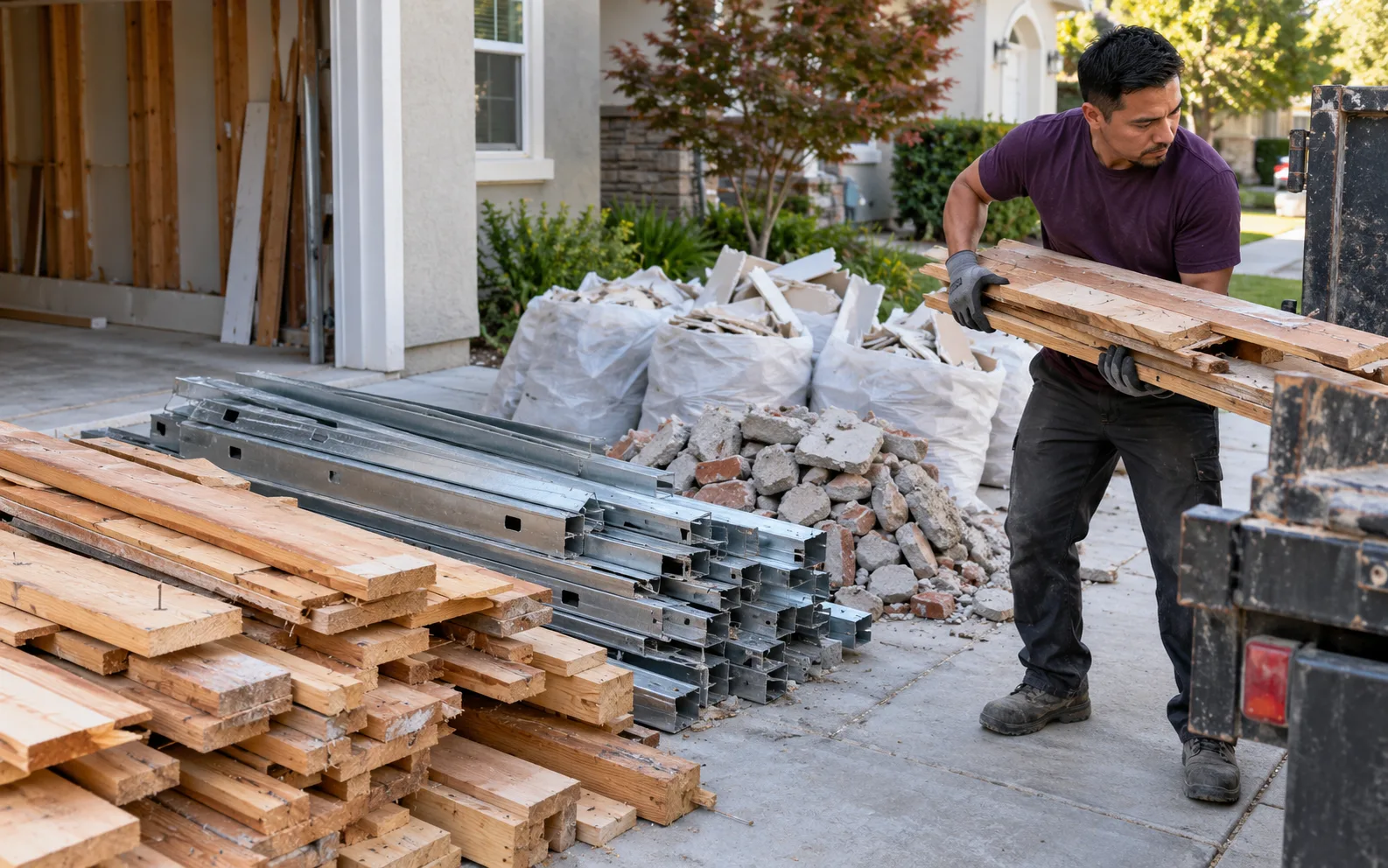
Concrete, brick, tile, and soil become heavy with little visible volume. Place them where they can be photographed and assessed without hiding them under lumber or drywall. Do not overfill bags or containers that people cannot lift safely.
Stack clean wood and metal separately
Straight lumber, short offcuts, metal studs, and fixtures are easier to evaluate when they are visible. Remove protruding nails only when you can do so safely; otherwise keep sharp ends away from walkways and tell the crew where they are.
Bag loose light debris
Small drywall pieces, insulation-free trim, and sweeping debris are easier to contain in durable bags. Keep bags light enough to move and avoid mixing unknown powder, liquids, or sharp sheet metal into them.
Set questionable material aside
Older building materials, chemicals, pressurized cylinders, fluorescent lamps, batteries, and containers with unreadable labels need a separate decision. Do not break, sand, or disturb material that may be regulated.
Pickup-ready check
- Heavy material photographed separately
- Wood and metal visible
- Loose debris contained
- Sharp edges identified
- Questionable material isolated
- Loading path kept clear
San Jose states that mixed construction and demolition debris is not collected through its curbside junk pickup program, so confirm the disposal route before placing material at the curb.